The Pardon Application Is a Waiting Room With a Security Camera
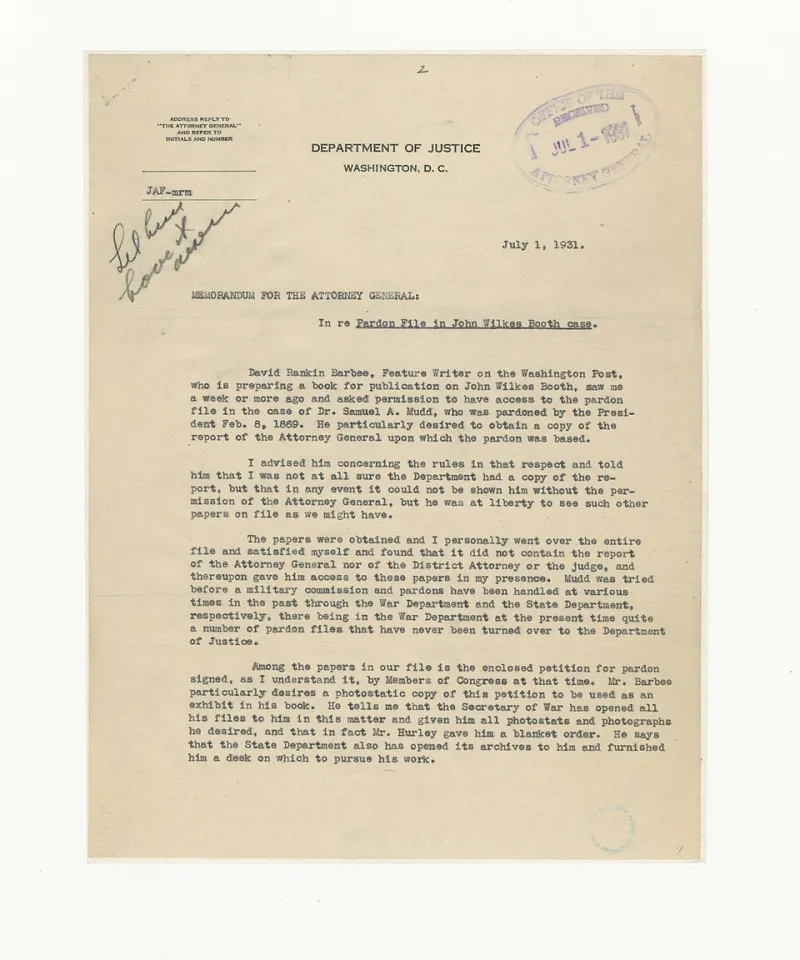
Photo: Unknown authorUnknown author or not provided, Public domain, via Wikimedia Commons
Federal clemency has no red carpet. It has a form, a file number, and a stack of paper that moves slower than holiday mail. That is not a knock on the people doing the work. It is the design. The Constitution gives the president the power to pardon and commute sentences, but the road to that pen runs through the Department of Justice's Office of the Pardon Attorney — a small office with a very large say in who gets a second look.
Most Americans picture clemency as a dramatic announcement: a president at a desk, a family crying, a reporter asking a pointed question. The actual product is a bureaucratic review chain. An application arrives. Staff attorneys read it. The FBI runs checks. Prosecutors and judges from the original case get a chance to weigh in. A recommendation climbs the ladder. Only then does the White House decide whether the case becomes a public act.
The first reader is a lawyer with a checklist
A federal clemency petition is not a short letter. It typically includes court records, sentencing information, personal statements, letters of support, employment history, tax records, and fingerprints. The Office of the Pardon Attorney reviews that package for eligibility, completeness, and the factors that have shaped federal clemency decisions for decades: the seriousness of the offense, remorse, rehabilitation, time served, post-conviction conduct, and the likelihood of law-abiding behavior going forward.
That list sounds neutral. It is not. 'Seriousness' is a judgment. 'Rehabilitation' is a judgment. 'Post-conviction conduct' can depend on prison records, program participation, and whether anyone bothered to document the good days. The checklist narrows the field, but discretion does the real work.
There is also a difference between forms of relief that gets lost in the cable-news version. A pardon forgives an offense. A commutation shortens a sentence. Remission refunds fines or restitution. A reprieve delays a punishment. They are not interchangeable, and they do not move through the same pile at the same speed.
The backlog is not one line
The clemency backlog is often described as a single queue. It is more like a filing room with several doors. Some petitions are waiting for initial review. Some are waiting on an investigation. Some are waiting on a prosecutor's response. Some are legally eligible but politically radioactive. Some are strong cases that arrived at the wrong moment.
By late 2026, the federal clemency pipeline is still measured in months and years, not weeks. That is not just a volume problem. Clemency is a personalized decision, and personalized decisions do not scale like a call center. Each file can trigger a background check, a review of old sentencing records, and a fresh argument about whether the person in front of you is the same person from the case file.
The office also handles commutation petitions, which can surge when politicians and advocacy groups push for sentence reductions. Those cases add pressure to the same small staff. A pardon application from a person with an old, low-level conviction may sit near a high-profile commutation request from a prison reform campaign. They are not equal in the newsroom. They are equal in the inbox.
The political weather is part of the file
Presidents use clemency differently. Some grant a batch before holidays. Some wait until the end of a term. Some avoid controversial grants entirely and sign off on cases that are hard to criticize. A grant can be a message to a coalition, a signal about criminal justice, or a simple act of mercy that advisers hope no one will notice. A denial is usually a nonevent. That asymmetry explains why clemency rarely becomes a march. The people who lose are quiet, and the people who win are grateful but not organized.
In a midterm year, clemency is also a risk calculation. The 2026 midterms are over, but the political weather has not cleared. Every grant can be turned into an attack ad. Every denial can be turned into a story about a heartless system. The safest case is often the one with a clean file and a sympathetic fact pattern. The hardest case is the one that asks a president to spend political capital on someone voters have never heard of.
Why the gatekeeper matters
The pardon attorney is not elected. Most Americans cannot name the person. But that office sets the pace, shapes the standards, and decides which cases get a real look. It is one of the least visible jobs in Washington and one of the most consequential for the people inside the system.
This is why the pardon queue matters beyond the individual files. It shows how a personal plea becomes a political decision. It shows how much of American justice runs on paperwork, timing, and the judgment of people who never give a press conference. In a culture that rewards the viral moment, the most consequential form in America is a PDF that nobody shares. The 2026 pipeline will produce stories that change families and barely register as news. That is not a bug in the system. It is the system.