The Bill That Runs Your Spring Is Already Sitting in Someone’s Draft Folder

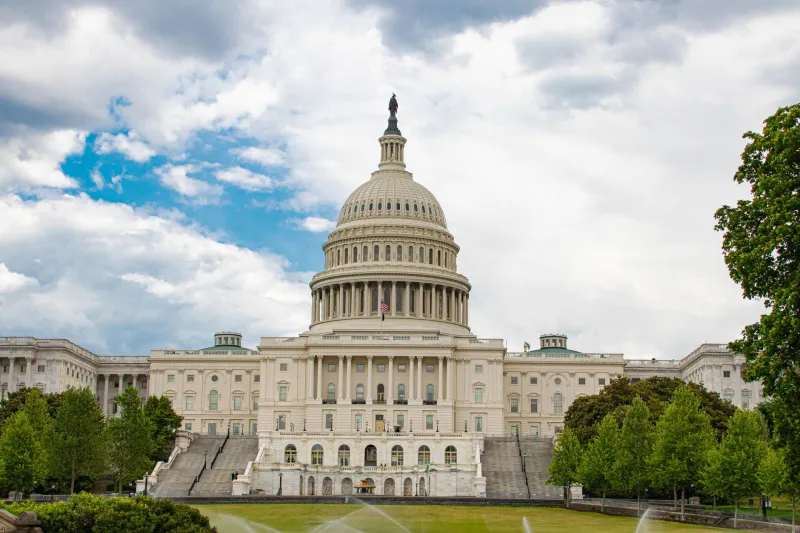
Photo: Chrismiceli, CC0, via Wikimedia Commons
If you live in a state where the legislature meets in January — which is most of them — right now is the quietest and most consequential political window of the year. The midterms are 11 days past. The new members haven’t been seated. The press corps is doing post-mortems. And in a basement office a few blocks from the capitol dome, a staffer is pasting language from a model bill into a template, changing two sentences to match state law, and emailing it to a friendly committee chair.
That bill will be filed in December. It will get a number. It will be reported on, briefly, as though it appeared from nowhere. It will not have appeared from nowhere.
Pre-filing is the actual legislative season
Many state legislatures allow members to pre-file bills weeks or months before the session opens. Virginia’s pre-filing period typically opens in mid-November for a January session. Several other states run similar windows. Even where formal pre-filing doesn’t exist, bill drafts circulate inside caucuses, agencies, and advocacy shops long before a number is assigned.
Why does that matter? Because the first version of a bill is almost always the most extreme version, and by the time it reaches a floor vote it has usually been softened, gutted, or quietly paid for. The earliest draft is where you can still see what someone actually wants.
The copy-paste pipeline is real and it’s not a conspiracy
There is an entire industry of model legislation. The American Legislative Exchange Council writes conservative-leaning templates. Progressive groups and unions have their own networks. The Uniform Law Commission drafts technical bills on things like commercial codes and family law. Trade associations, professional boards, and think tanks all maintain a drawer of pre-written text.
Lawmakers use these because writing a statute from scratch is hard and there are only so many staff hours in a day. That’s not sinister, but it has a consequence: bills arrive pre-loaded with someone else’s priorities, and the amendments that matter are often the ones drafted before the sponsor ever touched the file.
When you read a pre-filed bill and it cites definitions you don’t recognize, look them up. Definitions are where policy actually lives. A bill that regulates “covered entities” as defined in an attached paragraph can be a sweeping law or a decorative one, and the difference is usually six words.
The rooms that decide whether anything happens
Once bills get numbers, everything depends on referrals. Three committees do most of the killing:
- Rules. In many states this is where the leadership decides what gets a hearing and what quietly dies. It is often the most powerful committee nobody campaigns on.
- Finance and Appropriations. Any bill with a price tag goes here eventually. A bill that passes policy committee but never gets a fiscal note scheduled is a bill that’s been politely buried.
- State Affairs or Government Operations. The catch-all committee where redistricting, election law, and a surprising amount of personal-liberty legislation ends up.
Then there’s the funnel deadline — most states set a date by which bills must clear their first committee or die. Look up your state’s “crossover” or “funnel” date. It converts the entire session into a countdown and tells you exactly when to make noise.
How to find a bill before it has a number
This is the part that requires fifteen minutes and a browser, not a law degree.
- Check the legislature’s pre-filed bill list. Most state sites publish pre-filings as they arrive, searchable by sponsor. Start there.
- Search draft requests. A handful of states publish bill draft requests — the one-line descriptions members file before text exists. That’s the earliest public signal.
- Read the lobbyist registry. Every state requires lobbyists to disclose clients and, in many cases, the bills they’re working. Cross-reference new registrations with the pre-file list and patterns jump out fast.
- Watch agency budget requests. Departments submit their asks in the fall. A bill that implements an agency request often appears the same week.
- Set up alerts on the legislature’s bill tracking system. Free, ugly, and effective. Filter by keyword and by the committee you care about.
The six weeks nobody uses
Here’s the asymmetry that a well-organized interest group understands and most voters don’t: public comment is easiest to ignore during the session, when there are forty bills moving and a hearing that lasts ninety minutes. It’s hardest to ignore in November and December, when there is no hearing schedule to hide behind and a single well-argued email lands in an empty inbox.
So use the quiet. Email the sponsor before the bill has a number. Ask the committee chair’s office whether a fiscal note has been requested. Offer written testimony early — staff will often take it because nobody else has sent any. Show up to the local delegation meeting that gets four attendees and free coffee.
The fifteen-minute version
If you only do one thing this month: go to your legislature’s website, find the pre-filed bills, and search for the words “shall” and “may.” Those two words decide whether a law is a promise or a suggestion, and they’re already written.
The session starts in January. By then, the interesting decisions are mostly done.