Ninety Minutes Without a Speaker: The Power Transfer Nobody Livestreams
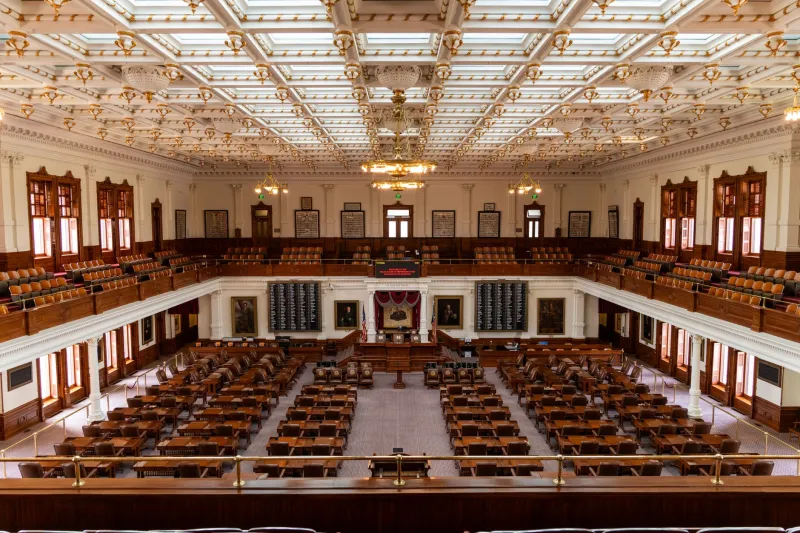
On January 3, 2027, the House will look like a photo op waiting to happen. Families will fill the galleries. Freshmen will wear new suits and old nerves. The C-SPAN camera will be on. And for roughly ninety minutes, the most powerful legislative body in the world will not have a Speaker.
That gap is not a glitch. It is the handoff.
We tend to treat election night as the moment power changes hands. Confetti falls, somebody gives a speech, the pundits draw arrows on a map. But in Congress, the actual transfer is a procedural hour that almost nobody photographs. The oath, the roll call, the vote for Speaker, the rules package, the committee assignments — it all tumbles together in a stretch of time that looks like paperwork and functions like a starting gun.
If you care about whether your flood insurance bill gets a hearing or your insulin pricing bill dies in a drawer, this is the hour to watch.
The Clerk Has the Gavel, but Nobody Has the Power
The Constitution is blunt about the basics: the House chooses its Speaker. It is less chatty about the awkward part before that happens. When the new Congress convenes, the Clerk of the previous House calls the chamber to order. That Clerk is not a Speaker. They are a temporary presiding officer — a procedural babysitter with a gavel and a script.
For those minutes, the House is a room full of people with name tags and no boss. Members-elect are not yet fully sworn. Committees are not yet organized. The rules of the previous Congress still cast a shadow. The whole institution is between leases.
This is the part of the story that gets edited out of the evening news. There is no soaring speech. There is a roll call, a lot of milling around, and a vote that can stretch into multiple ballots if the majority cannot get its act together. In 2023, the Speaker fight took four days and fifteen ballots. In 2025, it took one. Either way, the cameras eventually cut away.
But the deals are already moving.
The Vote Is the Easy Part. The Line for Gavels Starts Before It
Here is the thing about the Speaker election: by the time the Clerk starts reading names, the real bargaining is often done. Leadership races have been run. Committee ratios have been negotiated. Freshmen have been courted. The vote is the public ceremony on top of a private construction project.
What matters just after the vote is less glamorous and more consequential: who gets the gavels.
Committee chairs decide what gets subpoenaed, what gets marked up, and what quietly never gets scheduled. The House Rules Committee decides which amendments see daylight. Appropriations decides whose project gets funded. Ways and Means decides which tax idea gets a hearing and which one gets a polite promise. When a bill is introduced, the Speaker's office refers it to a committee. That referral can be the difference between a two-year investigation and a two-year nap.
During the handoff, those assignments are not fully locked. Staffers are jockeying for office space. New members are learning that the office lottery is real and that a good suite near the cafeteria is worth more than a fancy title. Committee slots are being traded like fantasy football picks. The freshman who ran on transparency is suddenly negotiating for a seat on Oversight. The sophomore who promised to shake up Washington is asking for Appropriations.
None of this is illegal. It is just human. And it happens fast, in hallways and group texts, while the camera is still fixed on the Speaker's chair.
The Oath Is Collective. The Scramble Is Individual.
Once the Speaker is elected, the oath usually comes in a batch. Members raise their hands, take the oath, and applaud. It is a nice moment. It is also the starting whistle.
After that, the House adopts its rules. The rules package is a dense document that most people will never read and every member should. It sets the motion-to-vacate threshold, the spending deadlines, the committee jurisdiction, and the floor procedure. It is where the majority tries to make its margin count. It is also where a single sentence can decide whether a minority party can force a vote.
Then the offices open, the committee assignments get ratified, and the new Congress starts pretending it was always this organized. But the ninety minutes before all that is where the shape of the next two years gets set. A bill that would have gone to Energy and Commerce instead goes to Ways and Means. A oversight request that would have died in one committee gets new life in another. A chair who owes a favor to a freshman remembers it in March.
The public sees the oath. The lobbyists see the referral sheet. Guess which one moves faster.
Why the Cameras Miss the Real Story
There is no villain in the handoff. That is why it is hard to cover. It is not a shouting match. It is a scheduling meeting. It is not a scandal. It is a sign-up sheet.
But the procedural hour is where a lot of promises get made and a lot of promises get parked. The Speaker's first referrals signal priorities. The committee roster signals whose district gets attention. The rules package signals how tight the majority intends to hold the leash. If you want to know whether Congress will spend the next two years investigating, legislating, or just fundraising, watch the boring part.
In January 2027, the camera will show you the Speaker. Look past the Speaker. Look at who is standing behind them, which committee chairs are already smiling, and which freshmen are already getting the cold shoulder. The gavel changes hands in public. The power changes hands in the margins.
Election night tells you who won. The ninety minutes after the gavel comes down tells you what winning actually means.