Somewhere in Virginia, Your Cell Number Has a Job Title
Photo: Shixart1985, CC BY 2.0, via Wikimedia Commons
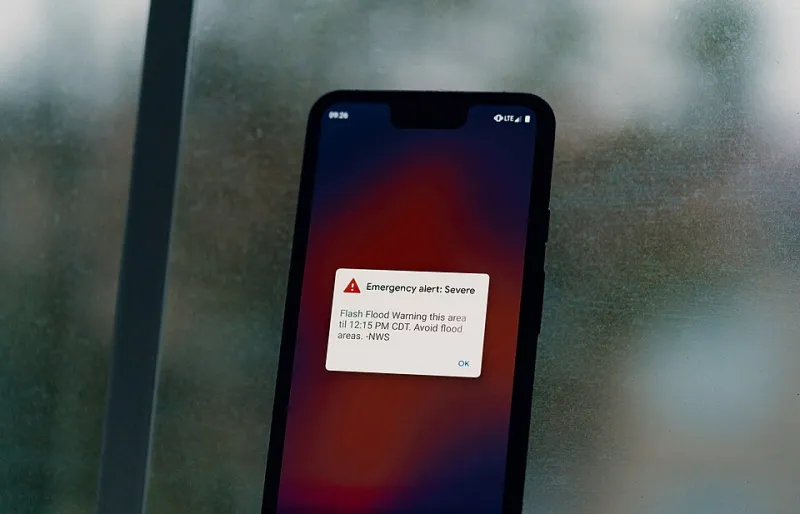
Quick quiz: between Labor Day and Election Day, how many political text messages hit your phone? Twenty? Forty? If you live in a swing district, the honest answer is probably closer to “I stopped counting and started screaming.”
Here is the part nobody tells you. Every one of those texts wasn’t just an annoyance. It was a transaction. Somebody paid to reach you, somebody measured whether you replied, and somebody filed your reaction away in a database that has a longer shelf life than the candidate who sent it.
Your number doesn’t live on your phone. It lives on a spreadsheet.
Campaigns collect contact information in embarrassingly ordinary ways. You signed a petition at the farmers market. You RSVP’d to a town hall. You texted a keyword to a five-digit number because a yard sign told you to. You donated $12 at 11:40 p.m. because a email subject line made you feel guilty.
All of that lands in a precinct-level database — Democrats overwhelmingly use one called VAN, Republicans lean on a competing system maintained through party and vendor networks. From there, the file gets appended. That’s the industry word for “we bought more information about you from somebody else and stapled it on.” Consumer data brokers supply age, income brackets, whether you own or rent, whether you have a landline, whether you’ve moved in the last two years.
By the time a midterm campaign is six weeks old, your record isn’t a name and a number. It’s a profile with scores attached — how often you vote, how likely you are to volunteer, how likely you are to open a text at 7:15 p.m. on a Tuesday.
“By providing your phone number, you consent to…”
The legal engine behind all this is a checkbox most people never see. Political fundraising platforms bury consent language in the fine print: recurring automated messages, message and data rates may apply, reply STOP to opt out. The Telephone Consumer Protection Act is the main federal statute governing automated texting, and the carriers enforce their own registration regime on top of it.
The practical result is that consent exists, technically, and it flows to a set of organizations described in language vague enough to cover a small army. “Our affiliates.” “Partner organizations.” Nobody is committing fraud. They’re just operating inside a definition of permission that would make your dentist blush.
So who actually ends up with your number?
Rarely a straight cash sale to a stranger. The reality is messier and more durable than that.
- Renting. Lists get rented between campaigns and committees for a defined window, often with contractual limits on copying. Those limits are enforced by lawyers who are busy.
- Trading. Consultants swap data as professional courtesy. If you’ve ever wondered why two unrelated campaigns seemed to know the same oddly specific thing about you, this is why.
- Appending. Even when the raw list doesn’t move, the profile built from it gets enriched and re-enriched by commercial brokers who sell to everybody.
- Survival. The campaign ends. The committee shuts down. The spreadsheet does not. Data has a way of outliving the entity that collected it, and enforcement of “we deleted it” promises is roughly as rigorous as a gym’s cancellation policy.
Federal disclosure rules require campaigns to report payments to vendors. They do not require a public ledger of who bought which list. So the money trail is visible and the data trail is not.
Why nobody is really watching
Here’s the uncomfortable structural fact: most state comprehensive privacy laws carve out political committees and nonprofits. There’s no federal consumer privacy statute. The FTC’s reach into political data is narrow. State attorneys general have plenty on their plates. Election officials regulate ballots, not mailing lists.
The result is a corner of the economy that is enormous, deeply personal, and almost entirely governed by terms of service.
What actually works, if you want to do something
Not much, but more than nothing. Four things, in order of effort:
- Use a second number. A free VoIP line for petitions, raffles, and anything with a clipboard. Give your real number to approximately four humans.
- Reply STOP. Actually do it. It’s honored more reliably than people assume, and it flags you as a bad target for the next vendor.
- Stop signing things you don’t care about. That petition for a cause you sort of support is a data-collection device with a signature line.
- Check what your state’s voter file publishes. Some states let you suppress your phone number or address from public voter files. It takes fifteen minutes and a form, and it does shrink your footprint — not to zero, but meaningfully.
The part to remember in 2028
Political data isn’t a scandal. It’s a business model, and it’s legal, and the people running it are not villains so much as optimizers. The system works exactly as designed.
The problem is that the design assumes you read the fine print at 11:40 p.m. You didn’t. Neither did anyone else. And the list you joined by accident keeps working long after the candidate who invited you has gone back to practicing law.