The AI Boom's Real Approval Process Happens in a Cafeteria on a Tuesday
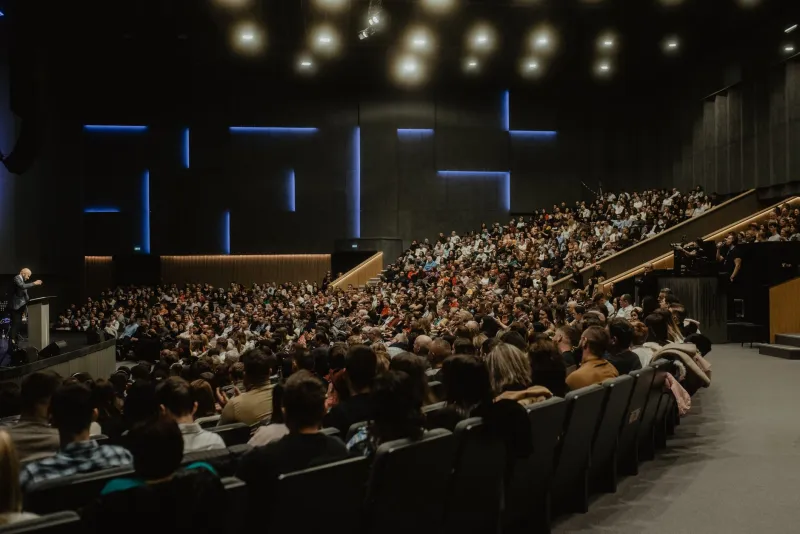
Somewhere in America tonight, a county planning commission will open a meeting with a prayer, approve a fence variance, argue about a cul-de-sac, and then arrive at agenda item seven: a conditional use permit for a data center the size of a regional airport. The room will be half full. The PowerPoint will be ninety slides. And the vote that follows may do more to shape the next decade of artificial intelligence in this country than anything that happens on Capitol Hill this year.
In 2026, the AI buildout is no longer a coastal story. It has moved into exurban counties and former industrial towns, chasing cheap land, fiber routes, and power. The companies behind it are household names in the business pages and LLCs on the zoning application. The people deciding whether they get to build are not tech regulators or federal officials. They are part-time elected officials with day jobs, sitting under fluorescent lights, listening to whoever signed up to speak.
The Agenda Item That Outranks the Headlines
Most of this country's land-use decisions happen at the county or municipal level, and data centers usually need a specific kind of permission: a rezoning, a special exception, a conditional use permit. That means a public hearing. That means a sign-up sheet. And in a lot of places, that means a three-minute limit per speaker, enforced by a timer that beeps whether you are finished or not.
Three minutes is not a lot of time. It is roughly the length of a pop song, or two-thirds of a sitcom scene. But in these rooms, three minutes is the entire public relations strategy. Companies spend months on community outreach and still get undone by a retired teacher with a water bill and a folder of documents. The reverse is also true: a well-organized opposition can stall a project for a year and still lose to a lawyer who summarizes the tax revenue in forty-five seconds.
Three Minutes Is Not a Formality — It's the Record
Here is the part most people miss. The public comment period is not theater, or not only theater. It creates the administrative record. If a project gets challenged in court, the record is what a judge reviews. Local officials know this. So do the lawyers in the room. A speaker who says "I just don't like it" is easy to set aside. A speaker who says "the applicant's noise study used a setback model that doesn't match the county's own ordinance" has just put a flag in the ground.
That is why the most effective three-minute speeches are boring on purpose. They cite a page number. They hold up a map. They ask a question the applicant has to answer on the record. The drama comes later, in the follow-up.
What Actually Moves a County Commissioner
Not slogans. Not national politics. Local officials tend to respond to three things: cost, risk, and whether their phone is going to ring tomorrow.
Cost is the easiest. Data centers are attractive because they generate property tax revenue without adding many students to the school system. A county that approves one can sometimes point to a new fire truck or a road repaving. That is a real argument, and it is usually the applicant's strongest one.
Risk is messier. A 300-megawatt facility draws serious electricity. It may need new transmission upgrades. It may run diesel generators for backup, which means noise and air permits. It may consume millions of gallons of water for cooling, depending on the design. Neighbors ask about all of it, and the answers vary wildly by project. The commissioner's question is not "is AI good?" It is "what happens to this intersection when the trucks start coming?"
And then there is the phone call. Elected officials in small jurisdictions are remarkably accessible. They go to the same grocery store as the people who speak at the podium. A credible neighbor with a specific complaint can carry more weight than a corporate consultant with a slide deck. That is not corruption. It is just the scale of the place.
The Water Bill Is the New Zoning Map
If there is one argument that has gained traction in 2026, it is water. Not because every data center uses the same amount — cooling designs differ enormously — but because the conversation has become concrete. Residents can see drought restrictions. They can read utility filings. They can ask what happens during a July heat wave when the grid is tight and the aquifer is low.
Power is close behind. Grid operators in several regions have warned that large loads are arriving faster than transmission can be built. That turns a local zoning vote into a regional energy story. A county commission may not control the grid, but it does control the land use, and applicants know that a denial here can send a signal to the next county over.
The companies are not passive in this. They show up with economic development staff, union reps, and promises of community benefit agreements. Some of those promises are real. Some are press releases. The three-minute speaker's job is to figure out which is which before the timer starts.
The Money Is Global, the Vote Is Local
There is a mismatch at the heart of this. The capital behind these projects is global. The decision is hyperlocal. That means the room is often the only place where the two meet in public.
It also means the room is where you can actually show up. You do not need a press pass or a federal agency. You need the meeting agenda, which is usually posted online, and a Tuesday night. You need to know whether the item is a discussion or a vote. You need to sign the sheet before the clerk closes it, which is often earlier than you think.
And if you are going to speak, bring the boring stuff. The page number. The ordinance. The question nobody has asked yet. Three minutes goes fast, but it is enough to change the record. In a lot of these counties, the record is the whole game.