Your Ballot Had a B-Side, and It Just Rewrote Your Block
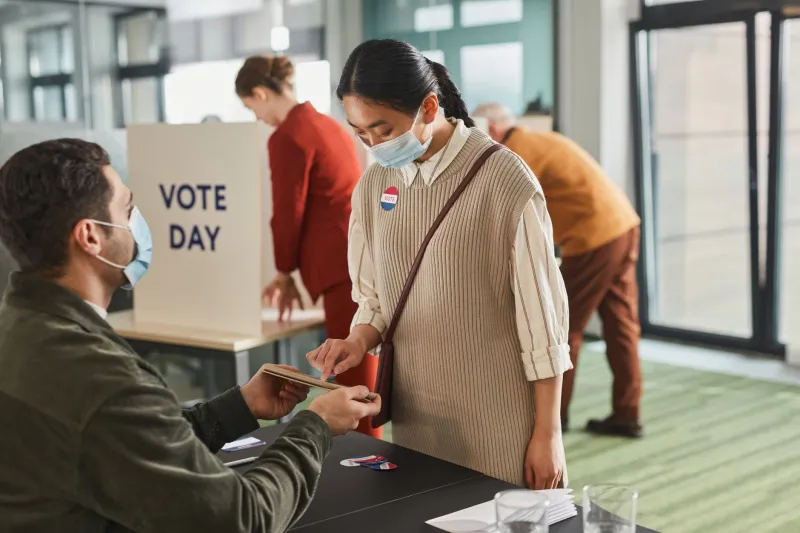
You probably knew your candidate for governor. You may have had strong feelings about a school board race, or a county sheriff, or that one judge whose ads got weird in October. And then, somewhere below all of that, there were four or five paragraphs of text about bonds, zoning overlays, and whether the city should be allowed to do a specific thing with a specific parcel of land.
You skipped them. Almost everyone did.
That's not a knock. Ballot measures are written to be skimmed, and they are structured to be skimmed past. But here's the part that stings a little: while the candidate races get the yard signs and the debates and the endless group-chat arguments, those quiet paragraphs are the ones that decide whether a duplex can go up next door, whether your property tax bill moves by a couple hundred bucks, and whether the county can finally fix the road you've been cursing since 2019.
The candidate is the loud part. The measure is the load-bearing part.
Ballot questions lose the attention war for a boring reason: they don't have a face. A candidate can look at you from a mailer. A candidate can say something dumb on a podcast. A ballot measure just sits there in twelve-point font, written by a lawyer, reviewed by another lawyer, and summarized in a pamphlet that most voters use to line the recycling bin.
So the campaign around a measure tends to be a different animal. Instead of rallies, you get a handful of mailers in the final two weeks. Instead of debates, you get dueling op-eds in the local paper and a website with a URL that looks like it was registered in a hurry. Instead of a candidate with a record to defend, you get a yes-or-no question with a helpful-sounding title that was itself fought over in court.
That's the other thing people don't realize: the wording you saw on the ballot was probably not the wording the drafters wanted. Supporters and opponents spend real money litigating ballot titles and summaries, because the difference between 'allows' and 'requires' can swing a few points. By the time you're standing in the booth, the fight over the sentence is over. You're just reacting to the final edit.
Who actually writes these things?
It depends on the state, and that's the honest answer. In some places, a ballot measure comes from the legislature, which means it already went through a committee process and a floor vote and probably a compromise or two. In others, it comes from a citizen petition drive, which means somebody gathered signatures, and somebody paid for those signatures, and that somebody is usually not a random neighbor with a clipboard and a strong opinion about sidewalks.
Signature-gathering is a business. There are firms that do it professionally, and they get paid per signature, and the committees that hire them are funded by donors who tend to have a financial or ideological stake in the outcome. That's not automatically sinister. It's just how the machinery works. A measure about, say, rent control or zoning reform or a new casino license does not appear on your ballot by magic. It appears because a organized group decided it was worth the money to put it there.
And once it's on the ballot, the money doesn't stop. Post-midterm campaign finance filings are already trickling out, and in most states you can look up who gave what to the yes committee and the no committee. It's public. It's just not popular. The donor list is usually a pretty good tell for whose problem the measure is actually solving.
From checked box to construction permit: the slow part
Here's where the story gets less dramatic and more important. Passing a ballot measure is not the same as implementing it. In a lot of cities and counties, the gap between Election Day and the first real-world consequence is measured in months, sometimes years.
A zoning change has to work its way through planning commissions, public hearings, and updated maps. A bond issue has to be sold, and the projects have to be scheduled, and the first thing you'll actually notice is a survey crew on your street. A drug policy measure might change the rules on paper long before the local police department, prosecutor, and health department agree on what the new rules mean in practice.
This is the part that almost never makes the news. The victory speech happens on election night. The implementation meeting happens on a Tuesday in February in a conference room with bad lighting, and the minutes get posted to a city website that hasn't been redesigned since the Obama administration.
That's not a reason to be cynical. It's a reason to be specific. If you care about a measure that passed, the follow-up is not another vote. The follow-up is a planning commission agenda, a budget line item, a request for proposal, a public comment period. Those are the levers now. They are less fun than a campaign, but they are where the paragraph you skipped actually turns into something on your block.
The next odd-year election is closer than it looks
Most states and cities have another round of local elections before the next presidential cycle gets loud again. That's where a lot of the truly small-bore, high-impact stuff lives: library districts, fire levies, utility boards, and the occasional ballot question about whether a town can sell a piece of land nobody has thought about in decades.
The turnout on those is usually brutal. Which means the people who do show up — the ones who bothered to read the whole ballot, including the boring part — have outsized influence. That's not a flaw in the system. It's the system working exactly as designed, for better or worse.
So next time you're in the booth, give the bottom of the ballot thirty extra seconds. Not because it's exciting. Because it's already happening, whether you read it or not.