Your City Council Has a Content Strategy Now
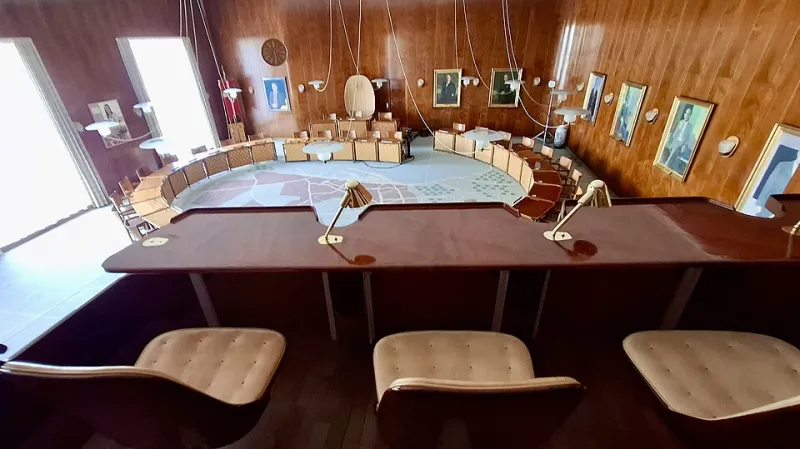
Photo: Ciara Ní Riain, CC BY-SA 4.0, via Wikimedia Commons
There's a video making the rounds this month of a small-town mayor in the Midwest calmly explaining, on camera, why he voted against his own planning commission. It's got two million views. The comments are split between people who think he's a hero and people who think he's a villain, and almost nobody in either camp lives within 500 miles of the town hall where it was filmed.
Welcome to the era of the two-minute mayor — the local official who has figured out that a city council meeting, once a sleepy affair recorded for a cable access channel nobody watched, is now raw material for content. And once you see it, you can't unsee it.
From C-SPAN to the For You Page
The original idea was noble and, honestly, kind of boring. Sunshine laws passed in the 1970s required public bodies to hold open meetings, and cable-era rules eventually required those meetings to be broadcast. The thinking was simple: if government has to operate in public, the public might actually watch.
For decades, that was mostly a technicality. The broadcasts existed. Nobody tuned in. A city council could spend three hours debating a zoning variance in front of a camera and an empty chamber, safe in the knowledge that the tape would vanish into a municipal archive.
Then two things happened. First, streaming got cheap — a laptop and a webcam could put any meeting on YouTube or Facebook Live for free. Second, short-form video turned long, dull proceedings into infinitely clippable material. A four-hour budget workshop is nothing. A 45-second exchange where a councilmember loses her temper over a pothole complaint? That's a hit.
The Performance Problem
Here's where it gets uncomfortable for people who care about good governance: when officials know they're being watched — really watched, by strangers, with an algorithm rewarding drama — the meeting changes.
Talk to people who sit through these meetings regularly and you'll hear a consistent set of complaints. Public comment periods turn into monologues aimed at the camera rather than the dais. Councilmembers deliver prepared statements on routine items that used to take thirty seconds. Votes that would once have been worked out quietly in a workshop session now get litigated live, because a dissent on the record is a clip, and a clip is reach.
None of this is illegal. Most of it isn't even new — politicians have played to cameras since cameras existed. What's new is the scale and the incentive structure. A state legislator performing for C-SPAN was performing for an audience of policy wonks and lobbyists. A small-town councilmember performing for TikTok is performing for an audience that can turn them into a national figure overnight. Several mayors of mid-sized cities now have follower counts that rival members of Congress.
When Clips Actually Change Policy
To be fair, this isn't purely a story about vanity. There are cases where going viral has produced genuinely better outcomes.
A few examples have emerged over the past couple of years that governance watchers like to cite. A resident's impassioned comments about a broken accessibility ramp, clipped and shared, got a repair project moved up the schedule by a full budget cycle. Viral footage of a chaotic public hearing on a housing development pushed a city to restructure its comment process entirely. In one town, a councilmember's grandstanding over a routine contract renewal drew so much online mockery that the council adopted new rules about agenda transparency just to stop being a meme.
In other words: sunlight still works. It just works differently now. Instead of a local newspaper reporter being the sole witness, the witness is everyone with a phone and a Wi-Fi connection.
The Transparency Trap
But there's a flip side, and it's worth taking seriously. Transparency rules were written assuming an audience of record-keepers, not an audience of millions. When a meeting is designed to be clipped, what gets preserved isn't deliberation — it's conflict.
The real work of local government, the unglamorous stuff like capital planning and intergovernmental agreements, happens in workshops and work sessions that almost nobody streams. What gets broadcast is the theatrical part. So the public record of a town's governance increasingly consists of its worst moments and loudest voices, edited by strangers with agendas.
Some cities are adapting. A handful have adopted rules requiring decorum in streamed meetings — which critics rightly point out can become a tool for silencing legitimate protest. Others have leaned in, hiring communications staff to produce highlight reels of their own meetings, essentially becoming the media company for their own government. Whether that's transparency or PR depends on your tolerance for spin.
What This Means for You
If you're a regular person trying to keep tabs on your town, a few things are worth knowing.
First, the viral clip is a starting point, not a conclusion. Before you share a video of a councilmember saying something outrageous, find the full meeting. Context is free, and it's usually available in the same place the clip came from.
Second, the boring parts of the agenda matter more than the dramatic ones. Consent agendas, consent items, workshop minutes — that's where the actual decisions hide. Nobody's clipping those, which is exactly why you should look.
Third, remember that the person performing outrage on your screen may be very good at this and very bad at the job. Virality is a measure of watchability, not competence. Some of the best local officials in the country have never said a single thing worth clipping.
The camera came to city hall promising accountability. It delivered that, partly. It also delivered an audience, and audiences change behavior. The towns that figure out how to keep the transparency without the theater will be the ones worth watching — even if nobody clips them.