The People Who Read the Fine Print So Your Town Doesn't Get Fooled
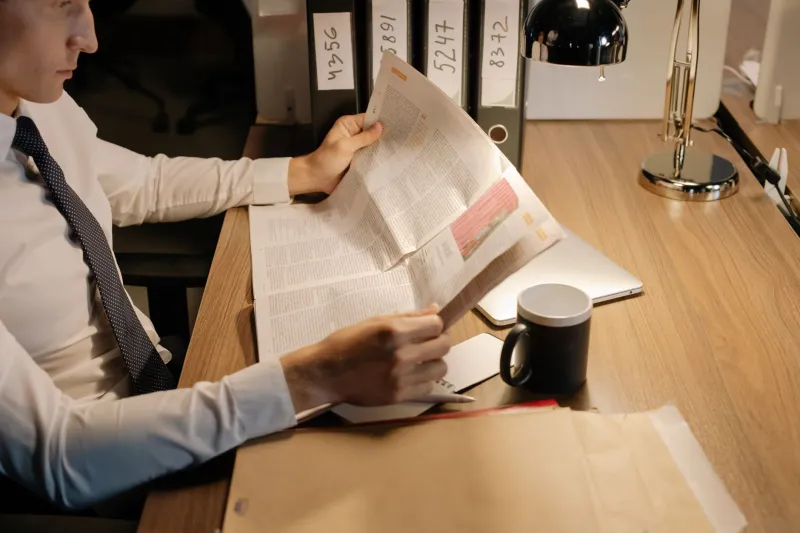
Somewhere between the county courthouse and your kitchen table, a ballot measure gets translated. Not by a campaign. Not by a PAC with a slick mailer. By a retired schoolteacher with a highlighter and a suspicion that the word 'reasonable' in a zoning ordinance means nothing at all.
We spent an election cycle checking in on three of these unofficial translators — a small-town newspaper editor in Ohio, a reference librarian in Georgia, and a retired CPA who runs a watchdog Facebook group in Arizona. Different states, different politics, same job: read the bill before everybody votes on it.
The Editor Who Reads 400 Pages a Week
Dale Kowalczyk edits a weekly paper outside Youngstown with a circulation you could fit in a high school gym. When the county commission floated a water authority consolidation bill, the press release called it 'a streamlined approach to regional services.' Dale read all 212 pages.
Buried on page 147: a provision that would have let the new authority issue bonds without a public vote.
'That's not streamlining,' Dale told readers in a column that ran with a single pull quote: No new taxes without a ballot. Two weeks later, the provision was stripped. Nobody in the county seat would go on record about why.
This is the unglamorous machinery of local democracy. A person. A document. A deadline. No algorithm does this.
The Librarian Who Became the County's Fact-Check Department
In a town outside Augusta, Georgia, the reference desk at the public library has quietly become the place where ballot questions go to get explained. Monica Tran doesn't editorialize — she builds packets. Pro and con. The actual statutory language. Who funds the supporting campaigns. Printouts, free to anyone.
During last fall's special purpose local option sales tax vote, her packet got photocopied so many times the library had to ration the printer. The county's own information line started referring callers to her.
'I'm not telling anybody how to vote,' she says. 'I'm telling them what the sentence means. Those are different jobs.'
The Retired Accountant Who Found the Math Problem
Ray Delgado, 71, spent thirty years auditing books in Tucson. Now he audits ballot measures. When a school bond proposal came with a promise that it would 'cost the typical homeowner less than a movie ticket,' Ray pulled the amortization schedules and found the fine print assumed a property valuation freeze that no council had ever voted on.
His post in a local group — charts, citations, no name-calling — got shared more than anything the campaigns sent out. The district revised its estimate. The bond passed anyway. But it passed with numbers people could actually see.
Why This Matters More Every Cycle
Legislation isn't getting simpler. Measures routinely top 100 pages, written in statutory shorthand that would take a lawyer an afternoon to unpack. Meanwhile, the average voter gets their ballot information from a 15-second ad or a text from a committee with a name like 'Citizens for a Brighter Tomorrow.'
The gap between what's on the page and what's in the ads is where bad policy slips through. The people closing that gap — editors, librarians, auditors, volunteers — are doing it for free, on deadline, without a byline most of the time.
So the next time a ballot measure seems confusing, consider that the confusion might be the point. And consider finding your town's version of Dale, Monica, or Ray. They exist. They're usually exhausted. And they are, without much exaggeration, the last line of defense between the fine print and your signature.